How to add direct mail to your customer retention strategy
Integrate direct mail into your customer retention strategy to build loyalty, cut through digital noise, and create personalised customer experiences.
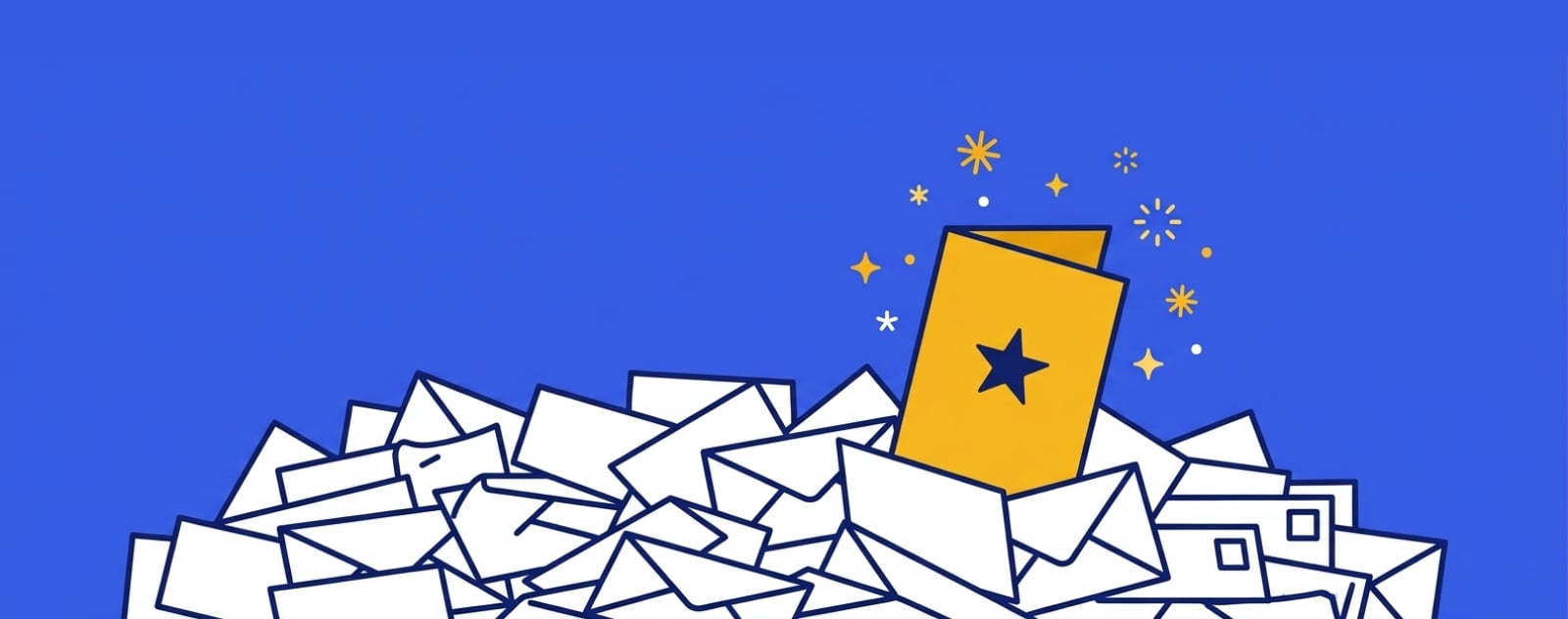
The business Christmas card is probably the most sent, least remembered piece of mail of the year. It arrives in the same fortnight as everyone else's, says the same thing, and ends up on a shelf in reception next to thirty others.
That's not because people have stopped caring about cards. UK shoppers spent £1.53 billion on single greeting cards in 2024, according to the Greeting Card Association. The problem is timing. When everyone sends at once, nobody stands out.
This guide makes the case for festive mail that lands just before the rush or just after it, and shows you how to plan it now.
Because every other business has had the same idea. Your card is competing with suppliers, banks, charities, retailers and the recipient's own friends and family.
The Greeting Card Association runs Festive Friday on 27 November this year, the day it encourages everyone to send their Christmas cards and start the annual exchange. From then on, the letterbox only gets busier.
A standard business card adds very little to that pile. A printed signature and "Season's greetings from all of us" don't tell the reader anything they'll remember in January.
Send it before the rush or after it. Both windows give your mail room to breathe.
A thank-you that lands before the last week of November arrives ahead of the Christmas card flood. It feels considered rather than seasonal, and it gives customers a reason to think of you before they plan their December spending. It will share the letterbox with Black Friday offers, but that works in your favour. A thank-you with nothing to sell stands out next to a pile of discounts.
The first two weeks of January are quiet. The cards have come down, the inbox is full of returns emails, and a well-timed piece of mail stands out. JICMAIL found that 9.4% of mail prompted a website visit in Q1 2026, a record for the first quarter.
If you're deciding how often to mail through the year, our guide to direct mail frequency covers how to space your sends.
Send something with a reason behind it. A message that refers to the year you've had together will always land better than a generic greeting.
For format, a greetings card is the natural choice. The folded A5 card feels like a card, not an advert, and there's room inside for a proper message. If you want something simpler, an A5 postcard puts your message on show the moment it lands.
Looking for more seasonal ideas? Last year's 5 Christmas direct mail campaigns and our New Year campaign ideas are good places to start.
Yes, and arguably it works better. Business Christmas cards are the most predictable mail of all, and they tend to pile up on reception desks.
A thank-you that arrives in the first week back after New Year lands on a quiet desk. It reminds your clients, suppliers and partners that you value the relationship before any new year budget conversations start.
It's also a strong retention move. JICMAIL's 2025 Response Rate Tracker found ROI of up to £11.50 for warm direct mail, sent to people who already know you. Our guide to adding direct mail to your retention strategy goes further.
Use your data. Stannp.com charges the same price whether every card is identical or completely personalised, so there's no reason to send a generic one.
Merge fields let you add first names, company names, account managers and customer start dates. Variable images let you change the picture for different groups, such as one design for long-standing customers and another for people who joined this year.
Add a QR code that links to a personal video, a thank-you offer or a short year-in-review page. QR code tracking then shows you who scanned and when. Our guide on how to personalise direct mail has more ideas.
The best time to plan a January send is November. Here's how to get it done before the Christmas rush.
This year, skip the pile. Create your free Stannp.com account, design your thank-you or New Year card, and schedule it to land when your customers will actually notice it.
Already using Stannp.com? Log in to design and schedule your card from your dashboard.

Yes, as long as it earns its place. A generic card sent in mid-December tends to blend in, so make it personal or move it to a quieter window. A thank-you card sent before the rush or in early January often gets more attention.
Before the last week of November, or in the first two weeks of January. Both windows avoid the Christmas card rush, so your card has a better chance of being read and remembered.
A thank-you with a specific reason, a year-in-review card, a New Year welcome, or an early offer for the new year. Anything that refers to the customer's own relationship with you will stand out more than a seasonal greeting.
A greetings card feels more personal and gives you room for a longer message inside. A postcard is simpler and shows your message straight away. For a heartfelt thank-you, the greetings card is usually the better fit.
Upload your customer list and use merge fields to add names, company details and other information to each card. On Stannp.com, personalisation costs the same as sending identical cards.
Yes. It lands when letterboxes are quiet, gives you a fresh reason to get in touch, and lets you look ahead to what's coming rather than back at the year.
The best festive mail isn't the card that arrives with everyone else's. It's the one that arrives when they're ready to read it. Get started for free and plan yours today.
Integrate direct mail into your customer retention strategy to build loyalty, cut through digital noise, and create personalised customer experiences.
Check out how to avoid common design mistakes in direct mail to ensure your campaign stands out and drives results.
The holidays are a perfect time to build relationships with your customers, and thank them for using your services over the last year..