What is a folded self-mailer?
Discover the benefits of folded self-mailers and how they can enhance your direct mail campaigns. Learn design tips and automation strategies.
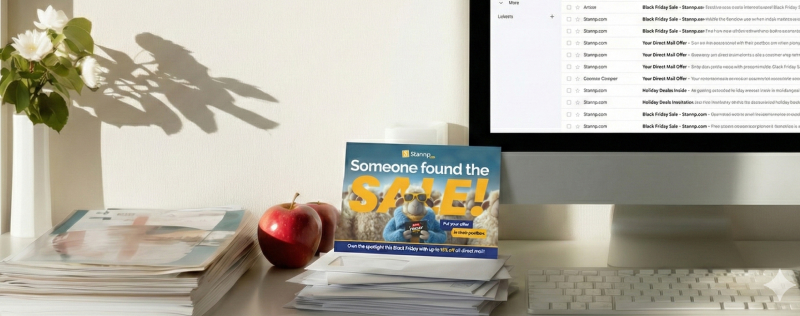
We're obviously biased toward direct mail. That's literally what we do. But pretending email doesn't exist or treating it as competition misses the entire point. When you use both channels together, each one makes the other more effective.
Most businesses treat their marketing channels like separate departments that never talk to each other. Email team does their thing, direct mail team does theirs, and nobody checks whether the customer is getting contradictory messages or the same offer three times in different formats.
The businesses seeing the best results aren't choosing between direct mail and email. They're using both in ways that actually make sense together.
Email is fast, cheap, and easy to ignore. Direct mail is slower, costs more, and significantly harder to delete without at least glancing at it. Those are features you can use strategically.
Email works well for time-sensitive stuff: flash sales, event reminders, "your order shipped" notifications. It's terrible for standing out when someone has 247 unread messages and yours is competing with work emails, newsletters they meant to unsubscribe from, and promotional messages from every other company they've ever bought from.
Direct mail can't compete on speed, but it doesn't need to. Physical mail gets kept, stuck on fridges, left on kitchen counters where multiple people see it. You can't forward a postcard to your spouse as easily as an email, but they'll probably see it anyway when it's sitting on the table.
When you combine them deliberately, you get the urgency of email with the tangibility of direct mail. One reinforces the other instead of just repeating the same message through different channels. Tech River found this approach helped them cut through digital noise in ways their purely digital campaigns couldn't. By sending direct mail postcards before making sales calls, they warmed up prospects and opened doors that would have stayed closed through email alone.
Lead with direct mail for brand introduction. Send a postcard or greetings card to cold prospects before you start emailing them. This isn't about getting an immediate sale. It's about making your brand familiar so your emails don't feel like spam when they show up later.
Someone who's seen your direct mail piece is more likely to open your email when it arrives. They've already encountered your brand in a format they couldn't instantly delete. Even if they threw away the postcard, there's a subconscious recognition that makes your email subject line less ignorable.
Time them for reinforcement, not redundancy. This is where most businesses mess it up. They send the exact same message via email and direct mail within a day of each other. All that does is train customers that they only need to pay attention to one channel because the other will repeat the information.
A better approach is to use direct mail for the primary message and email for follow-up details. Send a postcard announcing your spring sale two weeks before it starts, then send emails with specific offers as the sale approaches. Or reverse it - email first for the fast movers, direct mail second for the people who need more convincing.
Match urgency to channel, not the other way around. Flash sales and limited-time offers belong in email. Product launches, seasonal campaigns, and relationship-building messages work better in direct mail. Customer reactivation might use both: direct mail to break through and remind them you exist, email to provide easy next steps.
A restaurant sending a postcard about "Tonight's Special" is using the wrong channel. Sending a postcard about a new menu launch with a QR code, then following up with weekly emails about specific dishes? That makes sense.
HappyNest, a home services marketplace, saw 76% higher conversions by adding direct mail postcards to their email workflow. They used postcards with promotional offers to incentivise new customers to complete their first service, combining it with email sequences rather than relying on email alone.
Let format dictate content depth. Emails can link to landing pages with unlimited detail. Direct mail is constrained by physical space. Use this difference instead of fighting it.
Send a direct mail piece that covers the big picture and main offer, then use email to dive into specifics, answer common questions, or provide additional options. Someone interested enough to want details will appreciate the email. Someone who just needed the main message won't feel overwhelmed by a ten-paragraph postcard.
You can't figure out the right combination without testing different approaches. That doesn't mean running elaborate multivariate experiments. Start simpler.
Try one campaign where direct mail goes first, another where email leads. See which sequence gets better response rates. Test different time gaps between the two channels. Three days? One week? Two weeks? Your audience might behave differently than someone else's.
Pay attention to which offers work in which format. Some products or services sell better with physical mail. Others convert faster via email. The only way to know for your specific business is to measure results across both channels and see where the patterns emerge.
Most CRM systems can track whether someone received both email and direct mail, letting you compare response rates for people who only got one versus both. That single data point tells you whether the combination is actually worth the extra effort and cost.
Some people hate physical mail. Some people never check email. Most people fall somewhere in the middle and have preferences you won't discover unless you ask.
Give customers control over which channels they want to hear from you on. That might sound like you're reducing reach, but you're actually increasing effectiveness. Someone who opts into both channels is telling you they're engaged enough to want multiple touchpoints. Someone who only wants email is telling you not to waste money mailing them physical pieces they'll throw away.
Include preference settings in your account portal, on thank-you pages after purchase, or in your email footer. "Want to receive special offers by mail too?" isn't complicated to implement, and it gives you better data than guessing.
The businesses that do this well make it genuinely easy to update preferences, not buried in settings where nobody can find them. Make it obvious, respect what people tell you, and you'll get better results from the channels they actually want to use.
None of this works at scale if you're manually coordinating email and direct mail campaigns. That's why tools like Stannp.com integrate with email platforms and CRMs through our integrations. Set up rules once, then let automation handle the timing and coordination.
Someone abandons their cart? Send an email immediately, then a postcard three days later if they haven't returned. Customer hasn't purchased in 90 days? Start with direct mail to break through, follow up with email a week later. New customer makes their first purchase? Welcome email goes out automatically, thank-you postcard arrives a few days later.
The specific triggers and timing will vary based on your business, but the principle stays the same: automate the coordination so you're not manually managing two separate campaign calendars and hoping they line up correctly.
Platforms like Zapier or Make can connect your email system with Stannp.com if you're not using a CRM that does it natively. The integration takes an afternoon to set up and then runs without intervention. Much better than remembering to export lists and time campaigns manually.
Not every campaign needs both channels. Sometimes email alone works fine. Sometimes direct mail is enough by itself.
If you're sending purely transactional messages (order confirmations, shipping updates, password resets), email handles it. Adding direct mail doesn't improve anything and just costs money.
If you're doing high-touch B2B outreach where you're sending personalised packages to ten prospects, you probably don't need the email follow-up in the same cadence as a mass consumer campaign.
And if you're testing a completely new offer or audience, start with one channel to see if the message resonates before adding the complexity of coordination. No point in perfecting your multi-channel campaign if the fundamental offer doesn't work.
The hard part isn't understanding that direct mail and email can work together. The hard part is the operational coordination: getting lists synced, timing campaigns correctly, measuring results across channels, and not annoying customers with poorly coordinated messaging.
Start with one campaign where you deliberately plan both channels together from the beginning. Map out the customer journey, decide which channel handles which message, set up the automation, and measure results. Then refine based on what actually happens rather than what you assumed would happen.
Want to see how this works in practice? Log into your Stannp.com account or reach out if you want specific recommendations for your situation.

Discover the benefits of folded self-mailers and how they can enhance your direct mail campaigns. Learn design tips and automation strategies.
Unlock the potential of your summer direct mail campaigns with effective timing, tailored messaging, and proven strategies for maximum impact.
Discover how A/B testing in direct mail can enhance your campaigns by identifying what truly resonates with your audience for improved results.