Virtual printing vs franking machines: Which is right for your business?
Discover the best mailing solution for your business in 2026 by comparing traditional franking machines with modern virtual printing options.
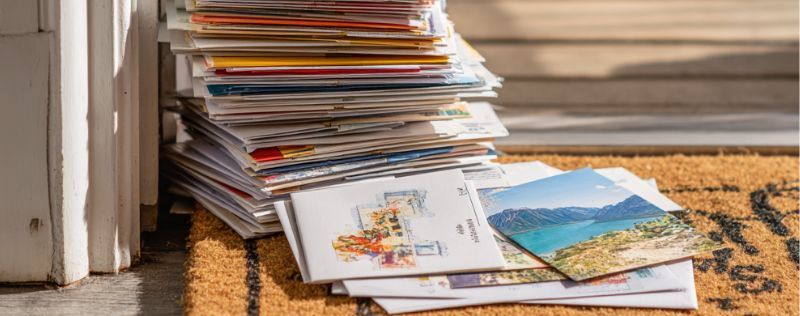
Understanding exactly when to send direct mail campaigns can be difficult. Send them too often, and customers may be frustrated or put off. Send them too infrequently, and you’re forgotten. Keeping up that momentum and staying in a customer's mind is key, but not overstepping the boundaries is crucial.
Unlike emails, where over-sending is easy, and the consequences, like unsubscribing, are more immediate, direct mail needs more strategic thinking. Due to cost and production time, direct mail usually requires more initial planning.
As a brand, staying in customers’ minds is an important stage of the marketing journey. To be remembered and recognised is key; brand recall influences 38.7% of brand lift.
With direct mail campaigns, you can make a significant impact with bold, eye-catching designs and accessible, physical mail that is delivered directly to customers. It has the power to stay in recipients' minds. According to a Marketreach report on the effectiveness of direct mail, it’s 49% more memorable and 33% more engaging than email marketing.
While direct mail is impactful, it’s important to note that it’s a commitment. The design, printing and posting journey costs money and takes time. It’s important to make it count. The frequency of how much you send directly impacts your brand recall. There isn’t any universal correct answer; it’s necessary to understand your brand and find what works for you specifically.
Understanding the industry standards is especially important when considering direct mail frequency. It can be very different depending on what industry you’re sending from. For eCommerce and retail, the sends are typically 1-2 a month, utilising promotions and seasonal peaks. For professional services like legal or healthcare, the optimal frequency would be quarterly or more immediate when transactional.
It’s important to consider the type of campaign you’re sending when you’re thinking about frequency. Once you understand this, it’ll make planning your campaigns a lot easier.
For promotional campaigns, they’re typically sent monthly to quarterly. These are usually used to utilise seasonal offers, new product launches and special events. With Stannp.com, you can connect your CRM via an integration or API, which allows brands to schedule ahead of time, create user-triggered actions and A/B test scenarios and formats.
The more transactional mail is typically sent as needed or when triggered by events. This is best for invoices, statements, reminders or confirmations. Our platform offers virtual printing, which is perfect for this. Simply upload your PDFs, and we’ll take care of the printing and posting, saving you time, effort and money.
These kinds of campaigns are typically sent bi-monthly or quarterly. These are usually customer retention, VIP programs, anniversary or birthday campaigns.
These campaigns are usually a one-off or a spaced-out series between 30, 60 and 90 days. This is typically best for lapsed customers or dormant accounts and usually features messaging such as ‘We miss you’ or ‘Special offer for you’. While these typically have lower response rates as it's an unengaged audience, it has big potential to get back into the minds of dormant customers.
If you’re serious about understanding direct mail frequency, testing what works and what doesn’t will be critical. Start off conservative, begin with a lower frequency like quarterly sends and increase based on response. It’s always easier to increase than decrease.
Then try splitting your audience into frequency test groups such as monthly, bi-monthly and quarterly. Track response rates or unsubscribe/opt-out requests. Look out for signs of fatigue like declining response rates over time or customer complaints.
The more engaged customers can handle higher frequency. The recent purchasers versus the more dormant customers need completely different cadences. Think about what that looks like for you. Maybe VIP customers receive the mail monthly, and general customers only every quarter. Think about when they would want to hear from you and why.
By automating, you can optimise your sends. You can set up campaigns that are triggered by certain behaviours that don’t follow fixed schedules. For example, send a win-back campaign 45 days after the last purchase, regardless of other campaign timing. Be smarter about what timings connect with people.
It’s common to make mistakes when sending direct mail campaigns; until you’re confident in understanding the right frequency for you, mistakes will happen. Understanding them will help you to avoid them.
One mistake is treating all customers the same. Segment by engagement, purchase frequency and customer value. That way, different segments can receive different frequencies.
Another mistake is ignoring multi-channel context. If you’re sending weekly emails, reduce your direct mail frequency. Make sure to coordinate touchpoints across all your channels so as not overwhelm your audiences.
If you never test, you’ll always be guessing. Even small improvements in frequency optimisation can have a big impact on your response rates and ROI. Don’t forget about seasonality; make sure to increase your frequency during peak seasons and reduce during slow periods.
Finally, a big mistake commonly made is sending without any reason. It’s important to be intentional with your campaigns. Each piece of mail should have a clear purpose and value. Just staying in touch with customers isn’t enough; you should provide genuine value.
So where do you go from here?
Crucially, it’s important to understand that there isn’t a perfect, one-size-fits-all solution. Be more intentional about the frequency of your campaigns.
With Stannp.com's no-minimum approach, you can test frequency strategies without committing to large volumes upfront. You can also automate your campaigns by integrating your CRM through tools like Zapier, Make or our REST API.
Ready to test your direct mail frequency strategy? Start with free samples to see the quality or create a free account to launch your first campaign.

Discover the best mailing solution for your business in 2026 by comparing traditional franking machines with modern virtual printing options.
Discover why relying solely on demographics for marketing isn't enough. Learn how behavioural data can enhance targeting, timing, and messaging in...
Discover the benefits of folded self-mailers and how they can enhance your direct mail campaigns. Learn design tips and automation strategies.